This site contains affiliate links. We may earn a commission on qualifying purchases.
“It walks across my counter.” That is how the conversation about this mixer usually starts, and I have had it enough times to know the next two sentences by heart: the caller has made a double batch of something, the bowl was full past where it should have been, and the machine did a slow, alarming shuffle toward the edge. The Hamilton Beach 4-quart electric stand mixer with 7 speeds is the subject here, and because I used to answer the phones for machines like it, this review is going to spend less time on whether it mixes — it mixes — and more time on the handful of conversations that decide whether owning it feels good or feels like a warranty claim waiting for a date.
First, the walking, since we are here. A stand mixer walks when the load is unbalanced and the feet lose their argument with a smooth counter, and it happens to light machines with heavy dough far more than to heavy machines with light dough. The Hamilton Beach is a light machine for its class. That is a feature when you are lifting it out of a cabinet — and this is the mixer for people who lift their mixer out of a cabinet, let us be clear about who it is for — and it is a liability at the top of its flour capacity. The fix list I used to give out is boring and complete: dry feet, dry counter, dough at the low speeds where dough belongs, and a batch sized to the bowl instead of to your optimism. Callers who did those four things stopped calling. Callers who wanted the machine to be heavier for the same money kept calling, and there was nothing in my script for them, because they were not wrong about the physics, just about which product they had bought.
“How much flour, really?” Second conversation. The bowl is 4 quarts, and a quart of bowl is a volume of water, not a promise about dough. The comfortable working load for this machine is around three and a half pounds of dough total, which in flour terms is roughly five to six cups depending on hydration, and the honest ceiling is lower for stiff doughs than for soft ones. Go past it and two things happen, in order: the dough climbs the hook toward the head, and the head starts to nod on its hinge with each rotation. The nodding is the machine asking you to stop before the conversation becomes about a gear. Which brings me to the thing I most want on the record: the gear that fails in mixers of this class is a sacrificial part, soft on purpose, there to die instead of the motor. A stripped gear after a stalled, overloaded bowl is the design working. It does not feel like the design working when it is your Saturday. Size the batch.
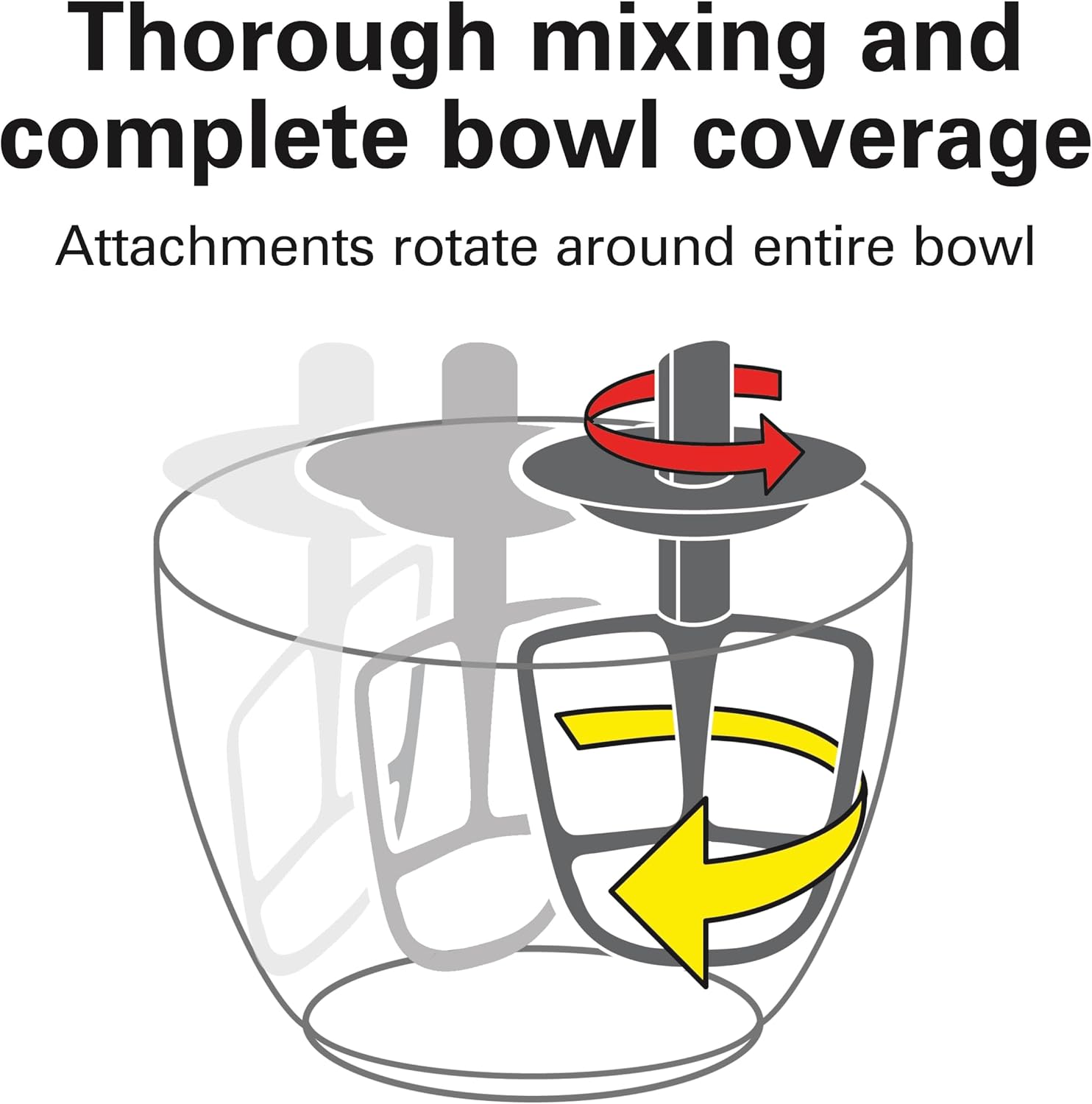
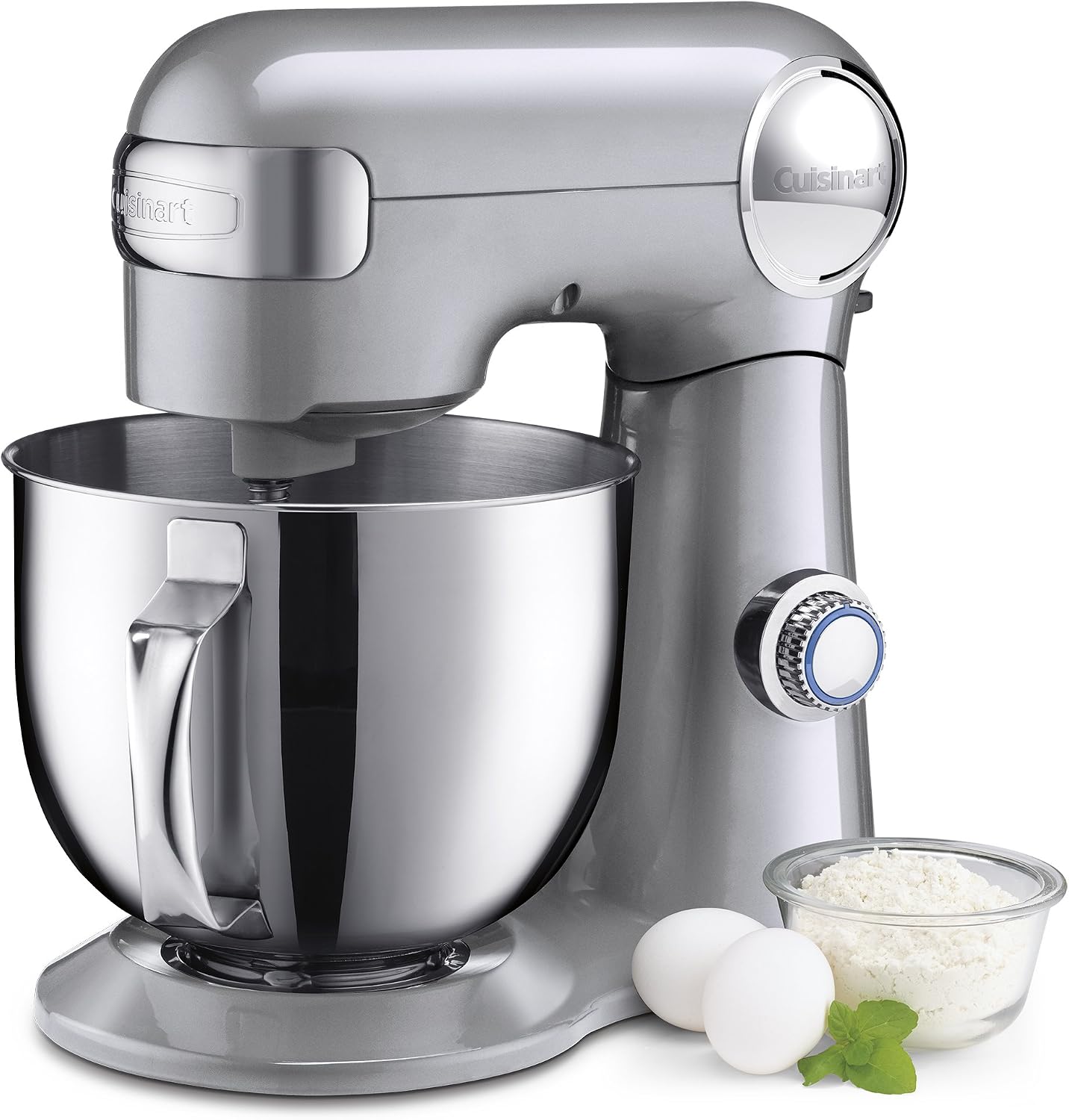
The seven speeds, since the title leads with them. Owners use about three: a low one for starting flour without redecorating, a middle one for batters and creaming, and a high one for egg whites and cream, which this machine genuinely does well because the planetary action carries the beater around the bowl instead of leaving it to spin in the middle. Between those three live four speeds that exist mostly so the dial has somewhere to travel. That is not a criticism; it is every mixer I ever supported, including the twelve-speed Cuisinart in the box below, whose extra speeds are the same three neighborhoods with more stops between them. What matters is whether the lowest speed is truly slow — on this Hamilton Beach it is slow enough to fold without flinging, provided you add flour in two additions like a person who has cleaned a kitchen before. Start dry ingredients on high once. Once is all it takes to learn.
The calls that were not the mixer’s fault, and the two that were
“It leaves a stripe of unmixed batter at the bottom.” Third conversation, and this one has a happy ending, because the cause is the beater-to-bowl clearance and on tilt-head machines there is an adjustment for it — a screw at the head, a quarter turn at a time, until a coin placed in the empty bowl just kisses the beater as it passes. Too far and the beater strikes the bowl, which is a worse conversation. Callers who made the adjustment described the stripe problem as solved, because it was. Where I cannot help is the version of this complaint about the very center under the beater on thick batters: every planetary mixer leaves a small shadow there, including the Artisan class in the Artisan 5 quart review, and one pass with a spatula at the midpoint is not a defect, it is baking. The Hamilton Beach ships with the standard trio — flat beater, whisk, dough hook — and its splash guard earns its shelf space on flour days and only flour days. The rest of the year it lives where all splash guards live, in the drawer of good intentions.
Now the two that were the mixer’s fault, because a review that only blames callers is a brochure. The tilt-head latch on this model line can develop play over years of use, and a head that rocks under load makes a knocking that no adjustment screw will cure — that one is a parts conversation, and parts for this brand are at least obtainable and cheap, which is more than I could say for half the machines I supported. And the bowl handle, or rather the confidence of it: a full 4-quart bowl of batter is heavier than the handle’s feel suggests, and I have taken the call about the dropped bowl, the shattered batter, and the floor. Pour from the bowl with two hands. The machine cannot say that in the manual’s voice, so I am saying it in mine. the Hamilton Beach stand-and-hand review covers the smaller Hamilton Beach that converts to a hand mixer, for readers deciding which branch of this family tree their kitchen is actually on.
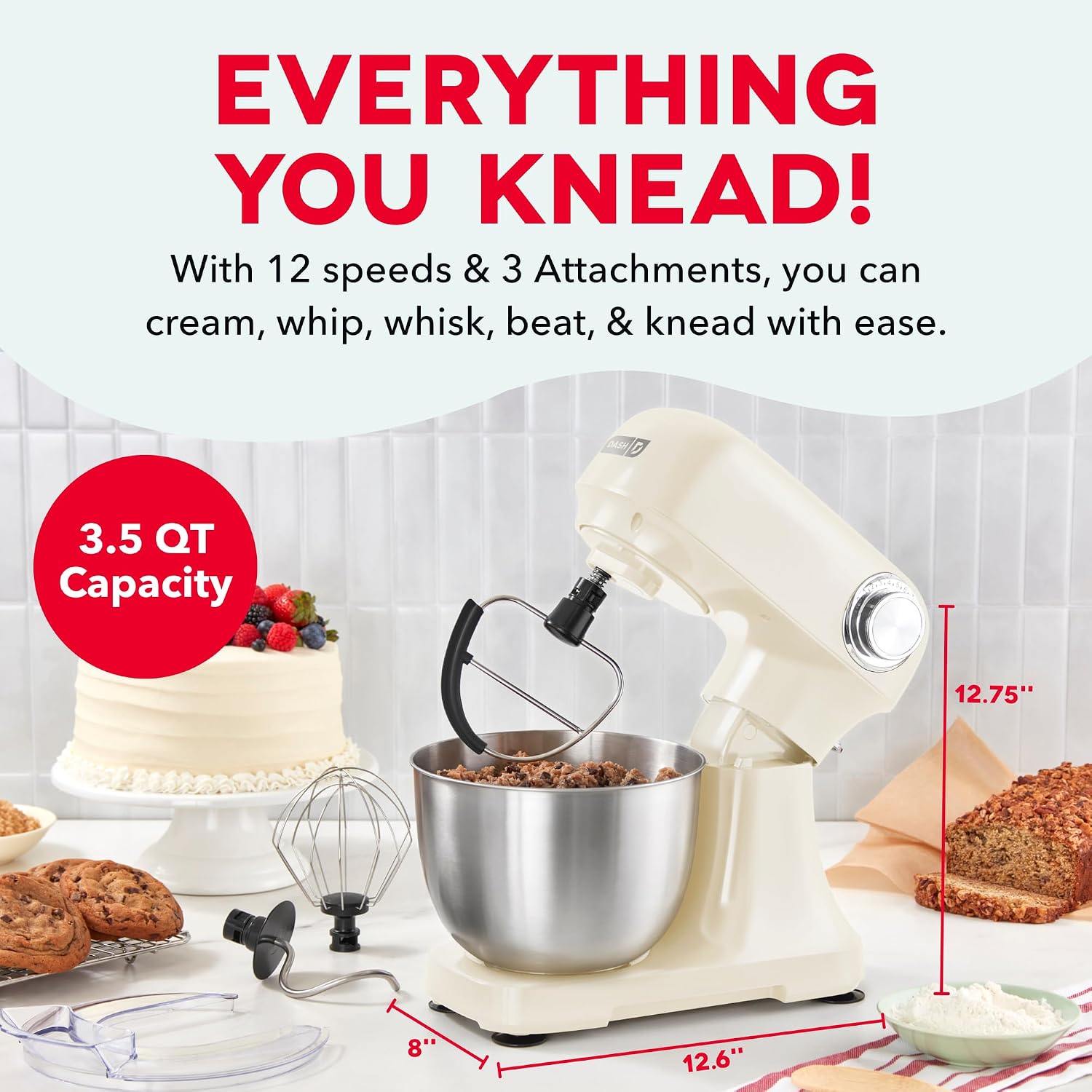
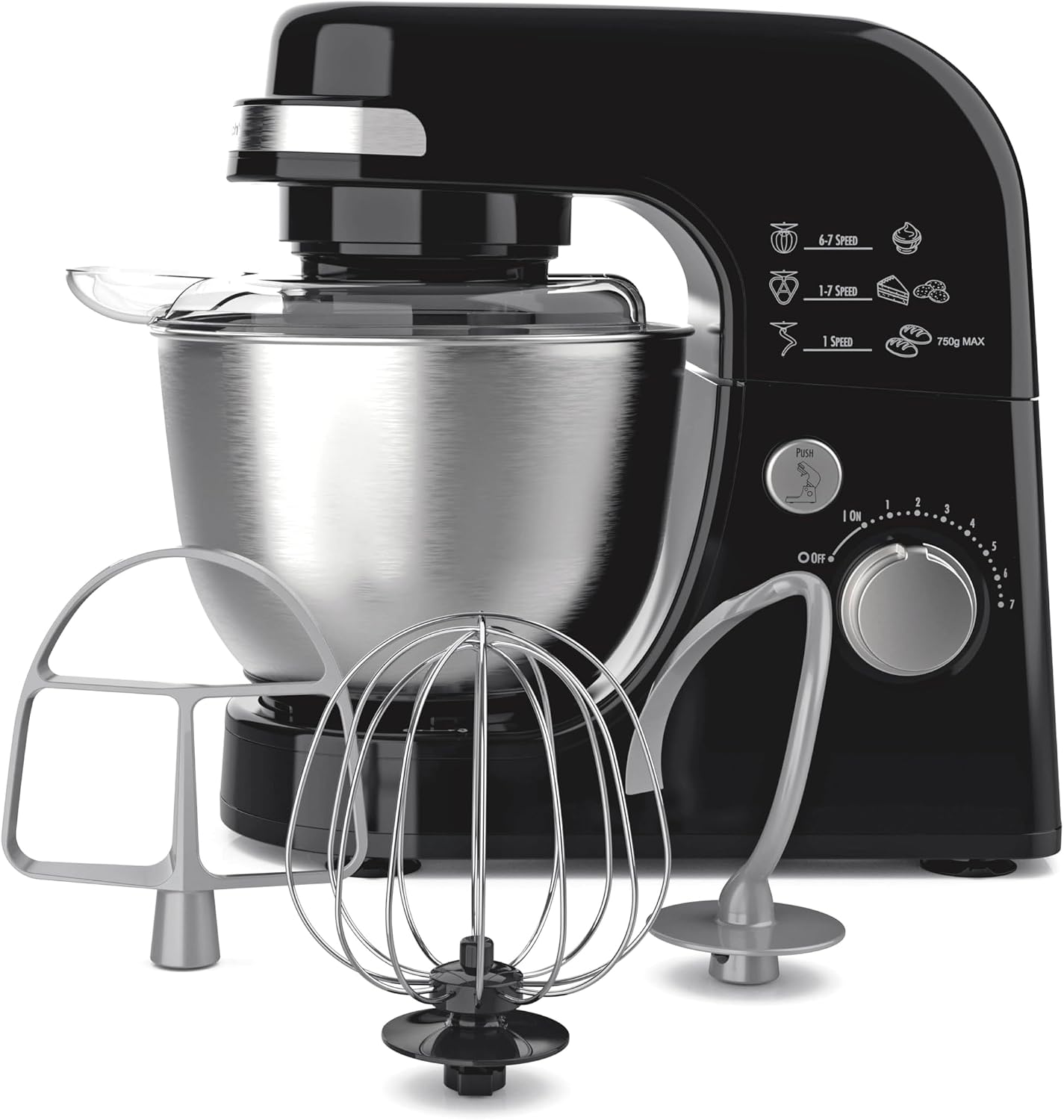
Planetary mixing action, the subject of this review
Prices and availability change; the listing is the final word.
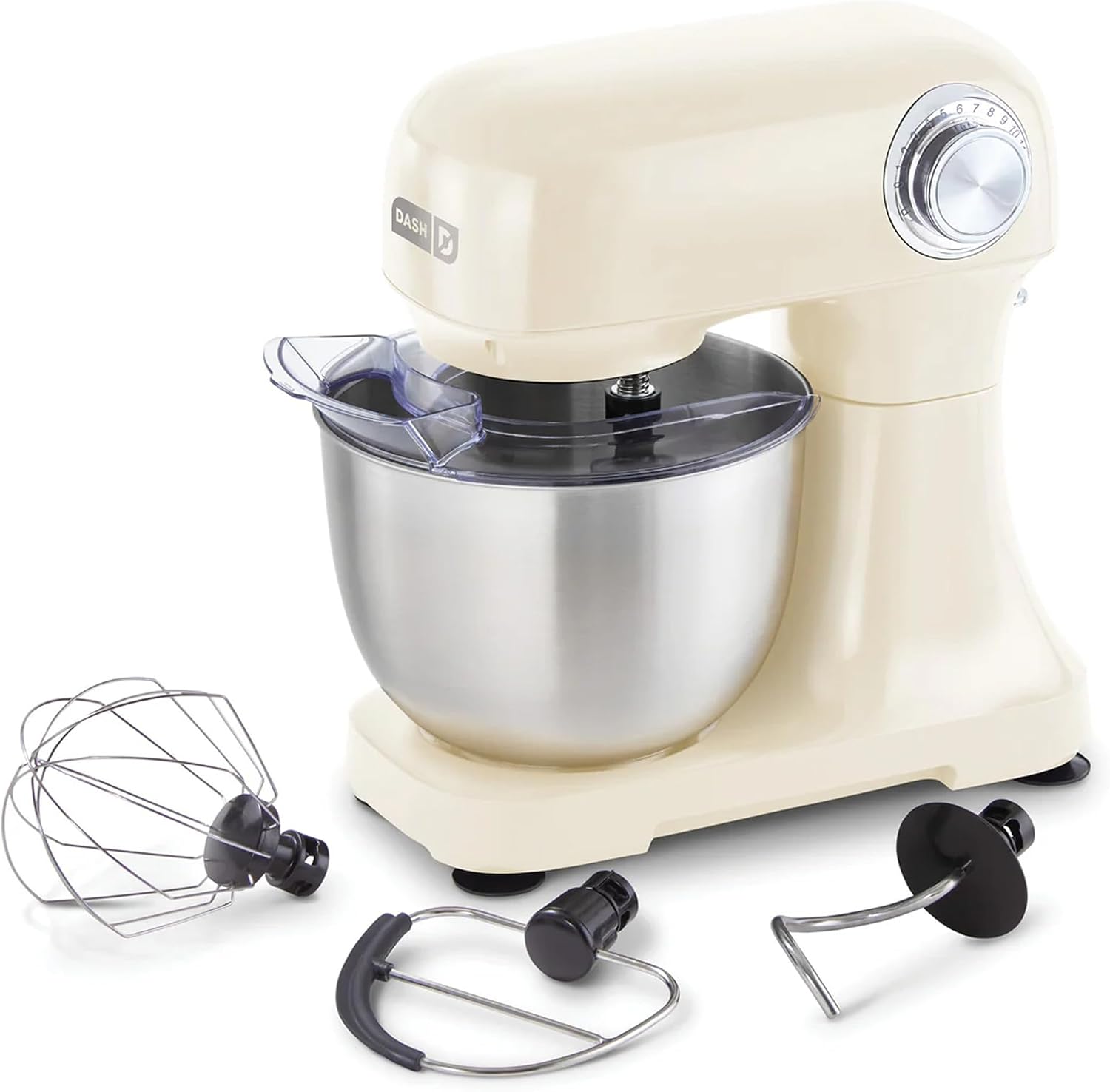
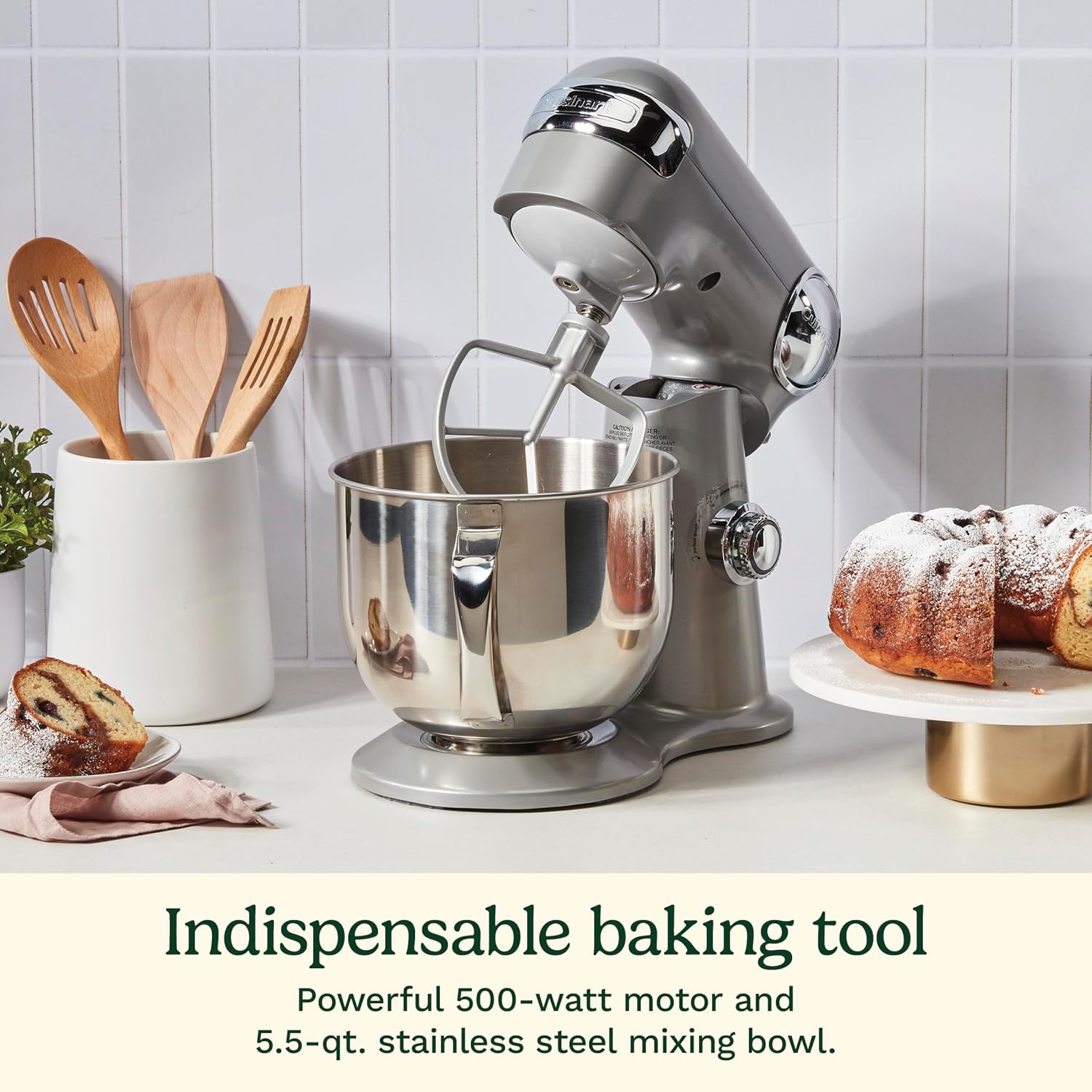
The Dash 3.5QT in the third box is the answer to a different caller: the one with a small kitchen, small batches, and a budget that ends the conversation early. It is lighter, simpler, and honest about being a sometimes machine — cookies, whipped cream, a single loaf’s worth of soft dough. The Cuisinart 5.5-quart is for the caller who outgrew the Hamilton Beach’s bowl and wants the headroom more than they want the savings; its twelve speeds are, as established, a dial with more stops, but the bowl size and the steadier stance under dough are real. Between the three, the Hamilton Beach is the one I would hand to the median caller: the apartment baker, the weekend cookie operation, the household that makes a birthday cake from scratch four times a year and box mix the rest. For that household, this machine at its price is not a compromise. It is the correct amount of mixer, which is a sentence I did not get to say often on the phones.
Attachments, briefly, because someone always asks about the port on the front and the dream of one machine doing everything. This class of Hamilton Beach does not run a hub ecosystem the way the bigger brands do, and I consider that a mercy disguised as a limitation. The callers with attachment graveyards — pasta rollers for a machine they sold, grinders still in shrink wrap — spent more on the dream than the attachments ever returned. Buy this mixer to mix. If pasta arrives in your life later, it will bring its own machine with it, the way hobbies do.
Questions that come up
My mixer walks across the counter when I make bread dough. Is it defective?
Usually not. Walking happens when a light machine meets an unbalanced, heavy load on a smooth surface, and this mixer is light for its class — that is why it is easy to lift from a cabinet. Dry the feet and the counter, keep dough on the lowest speeds, and size the batch to the bowl: around three and a half pounds of dough total is the comfortable ceiling, less for stiff doughs. If it still walks with a modest batch on a dry counter, check that all four feet are present and the bowl is locked fully into its base. A bowl that is a quarter turn short of locked will make the whole machine travel and clatter, and the fix is a twist, not a technician.
There is always a stripe of unmixed flour at the bottom of the bowl. What am I doing wrong?
Probably nothing, or one small thing. The gap between the flat beater and the bowl bottom is set at the factory for an average bowl, and if your stripe is consistent, the clearance adjustment on the head — a screw turned a quarter turn at a time, tested with a coin in the empty bowl — usually closes it. Turn too far and the beater will strike the bowl, which is worse. A small shadow of unmixed batter at the very center, under the beater’s path, is normal for planetary mixers at every price and is what the mid-mix scrape with a spatula is for. If the stripe appeared suddenly after years of good service, though, mention that when you call — a worn beater or a bowl that has been dropped out of round tells a different story.
Can I double my sandwich bread recipe in the 4-quart bowl?
That is the question behind more dead gears than any other I handled. A doubled sandwich loaf batch usually lands past five pounds of dough, and this machine’s comfortable working ceiling is around three and a half pounds. Past that, the dough climbs the hook, the head starts to nod, and the sacrificial gear absorbs the difference until it cannot. The gear is soft on purpose, to protect the motor, so a stripped gear after an overloaded stall is the design spending itself to save you a motor — small comfort on the day. Make the dough in two batches, or step up to the 5.5-quart class if doubling is your weekly habit rather than your holiday exception.
The head knocks and rocks when the dough gets thick. Should I keep using it?
Slow down and find out which knock it is. A soft nod under a heavy batch that disappears with softer dough or a smaller load is the machine working at its limit — reduce the batch and the speed. A hard knock or a head that rocks even with light batters points at latch play or a hinge that has loosened over time, and that one does not heal; continued use under load makes it worse. That is a parts conversation, and the fair news is that parts for this brand are generally available and inexpensive compared with the premium names. What I would not do is hold the head down by hand to finish the batch. I took that call too. Hands and planetary beaters should keep their distance, always, even when the dough is nearly done and especially then.
The last call I remember clearly about this mixer was not a complaint at all. A woman had made her mother’s Christmas cookies with it, the soft ones, the ones that had defeated her hand mixer for years, and she called just to say the low speed did not throw flour. Nobody calls a support line to say that. I still think about it when I read the one-star reviews, most of which are about walking, or flour, or a batch twice the size of the bowl.
This site contains affiliate links. We may earn a commission on qualifying purchases.