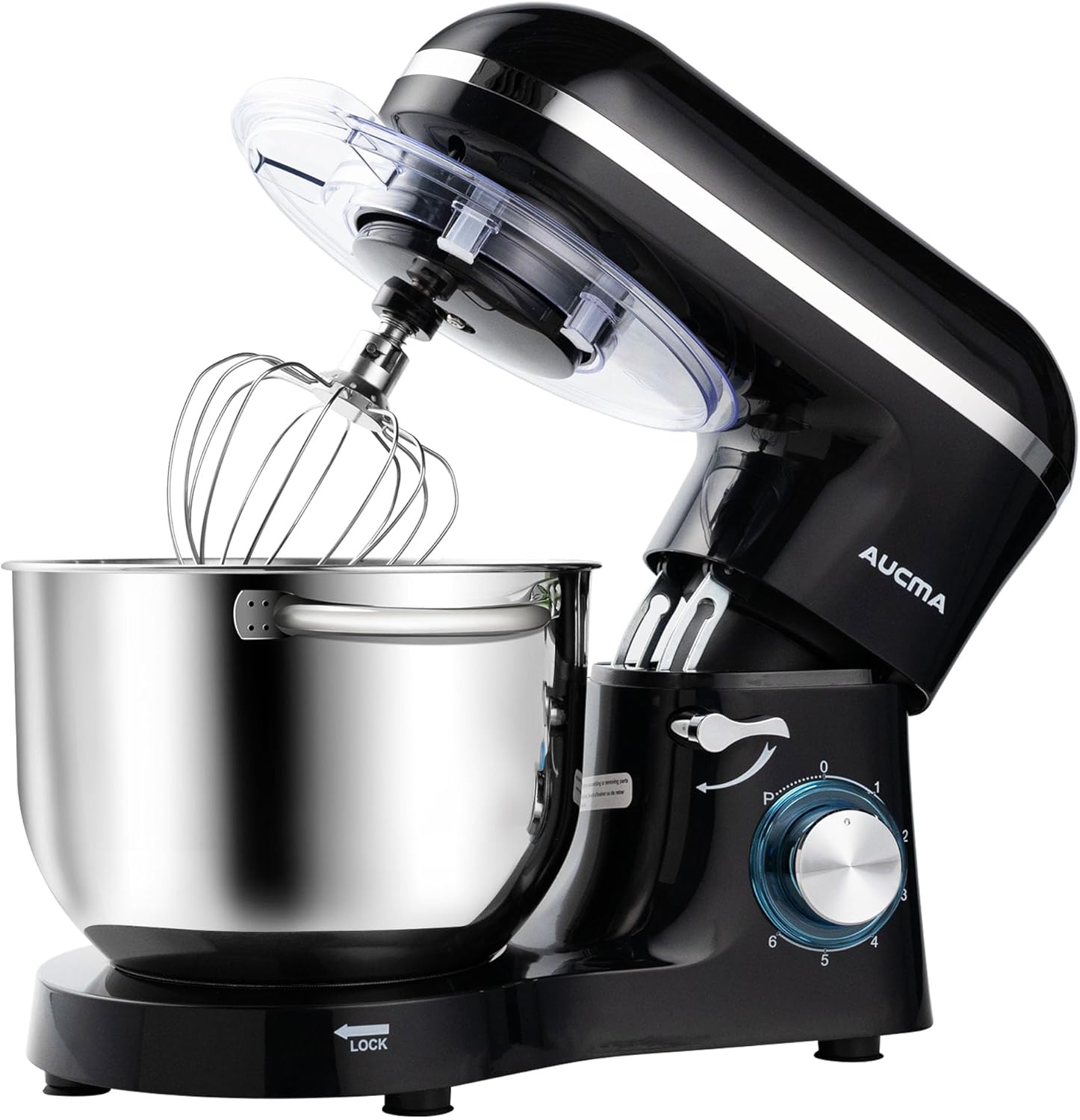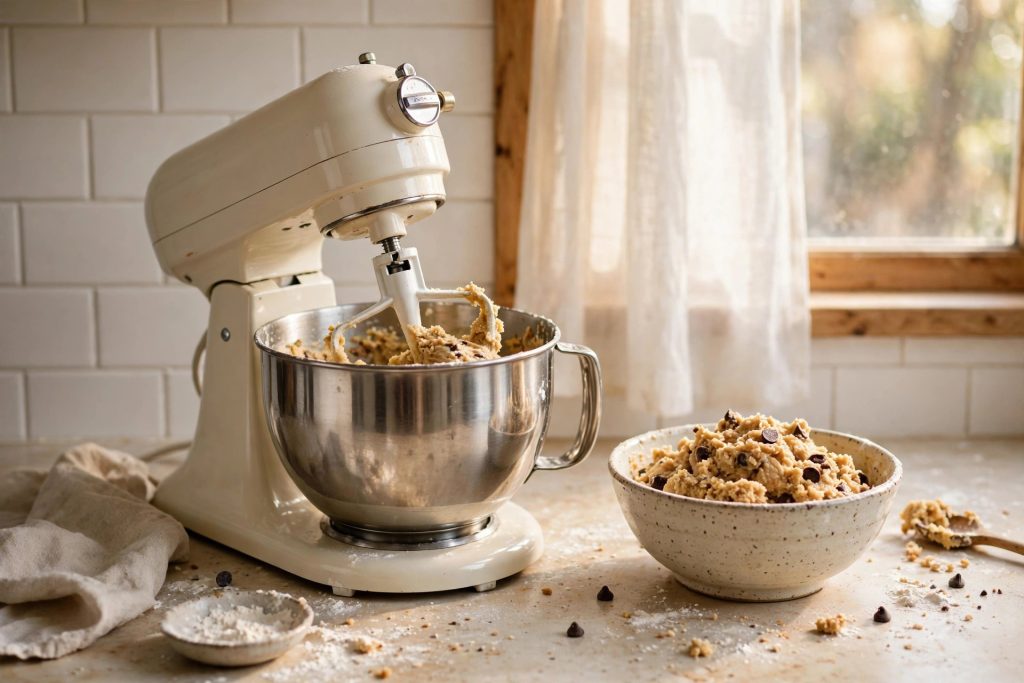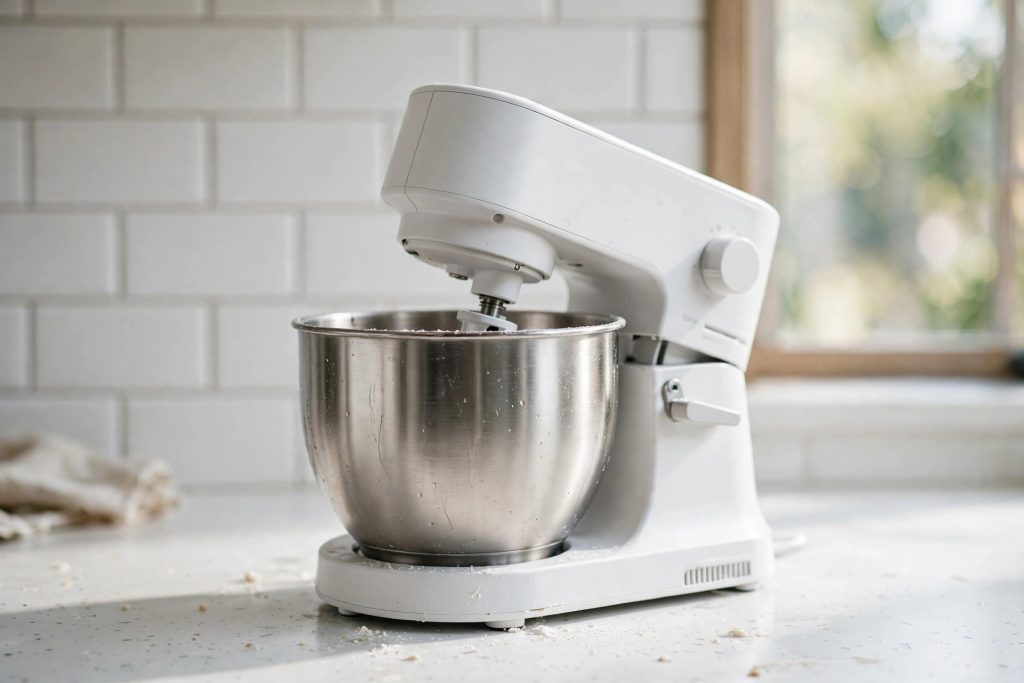
The video that sold me had 2.4 million views. A woman in a linen apron — linen, in a kitchen, already a red flag — dropped a shaggy ball of dough into this mixer, walked away to arrange flowers, and came back to a silky, windowpane-perfect dough ball. The caption said “fermentation function changed my bread game.” I watched it three times. I bought the mixer that night. What arrived was a 5.2-quart stand mixer with a “fermentation” setting that is, as far as I can tell, a warm spot with a timer.
Let me be fair before I get mean: it’s a stand mixer. It mixes. The 5.2-quart bowl is a real 5.2 quarts, stainless, handles a double batch of pizza dough without the motor smelling like it’s filing a complaint. I’ve had it four months now. I use it weekly. The dough hook actually reaches the bottom of the bowl, which sounds like a low bar until you’ve owned a mixer where the hook hovers a quarter inch above the flour and just pushes it around in circles like a Zamboni. But the fermentation function — the thing in the product name, the reason it costs more than a regular mixer — needs to be talked about honestly, because the influencer economy has decided it’s magic and it is not magic.
Anyway.
Here’s what “fermentation” means on this machine: the bowl area holds a low, steady warmth, somewhere in the 80s Fahrenheit, I’m guessing, since the manual doesn’t give a number and I don’t own a thermometer I’d trust for this. You put your dough in, set the time, and it proofs in a warm environment instead of on your counter. That’s it. That’s the whole feature. A proofing box. Which is genuinely useful in winter, I won’t lie — my kitchen runs cold, like 64 degrees in January, and dough proofs slowly at 64. But every video about this mixer films the fermentation function like it’s a sourdough accelerator invented by NASA. It’s a warm spot. Your oven with the light on is a warm spot. A turned-off oven with a bowl of hot water in it is a warm spot. The mixer just charges you for the warm spot and puts it in the product title.
I haven’t used the bigger 6.5-quart version, so I can’t say whether the extra capacity changes the equation.
This is the part where I admit something: I wanted it to be magic. I wanted to be the person with the linen apron and the perfect dough ball. I followed the video’s recipe exactly — same flour, same hydration, same times — and my dough was fine. Fine! Good bread, even. But it was the same bread I made before, when I proofed in the oven with the light on. The mixer didn’t change my bread game. It changed my counter space game, because now there’s a 5.2-quart appliance living where the fruit bowl used to be. The fruit lives in the fridge now. The fruit is fine. I’m the one with the problem.
Actually, that’s not fair — the mixer didn’t disappoint me, the video did. The machine does what it does; the marketing did the rest.
The rest of the machine, judged as a mixer and not as a lifestyle: the motor is rated at some wattage the listing states confidently and I don’t fully trust, because the whole budget-mixer category inflates wattage like resumes inflate job titles. What I can tell you is observed behavior: it handles 500 grams of flour at 65% hydration without straining, it starts to sound labored around 800 grams, and I wouldn’t push it past a kilo. The speed dial has a dead zone at the low end where settings 1 and 2 feel identical, then a jump at 3. The splash guard fits loosely and rattles at high speed. These are the details that never make it into the 2.4-million-view video, because “splash guard rattles” doesn’t get comments.
Not magic.
And can we talk about the reviews for a second? Not this product specifically — the whole category. Every budget stand mixer on the major platforms has 4.3 stars and three thousand reviews, and they all say the same things: “great for the price,” “does the job,” “not a KitchenAid but.” That last phrase is doing so much work. “Not a KitchenAid but” is the budget appliance industry’s entire quality standard, and it’s a standard that means nothing, because it positions a $400 machine as the reference point and then grades on a curve where “doesn’t immediately break” is a passing grade. I write this as someone who owns a budget mixer. I’m not above it. I’m just tired of pretending the curve is the same as the standard.
Off on a tangent, but related in spirit: I returned a bread lame last year. A bread lame. Ten dollars. The blade was dull out of the package, and instead of just buying a pack of razor blades like a normal person, I initiated a return, printed a label, and drove to the drop-off point. The gas cost more than the lame. My partner watched me do this and said nothing, which was worse than saying something. There’s a point where frugality becomes a hobby and then a personality disorder, and I think about that lame every time I catch myself comparison-shopping something under twenty dollars for more than ten minutes. The mixer was not under twenty dollars. I comparison-shopped it for three weeks. The linen apron woman got me in the end anyway.
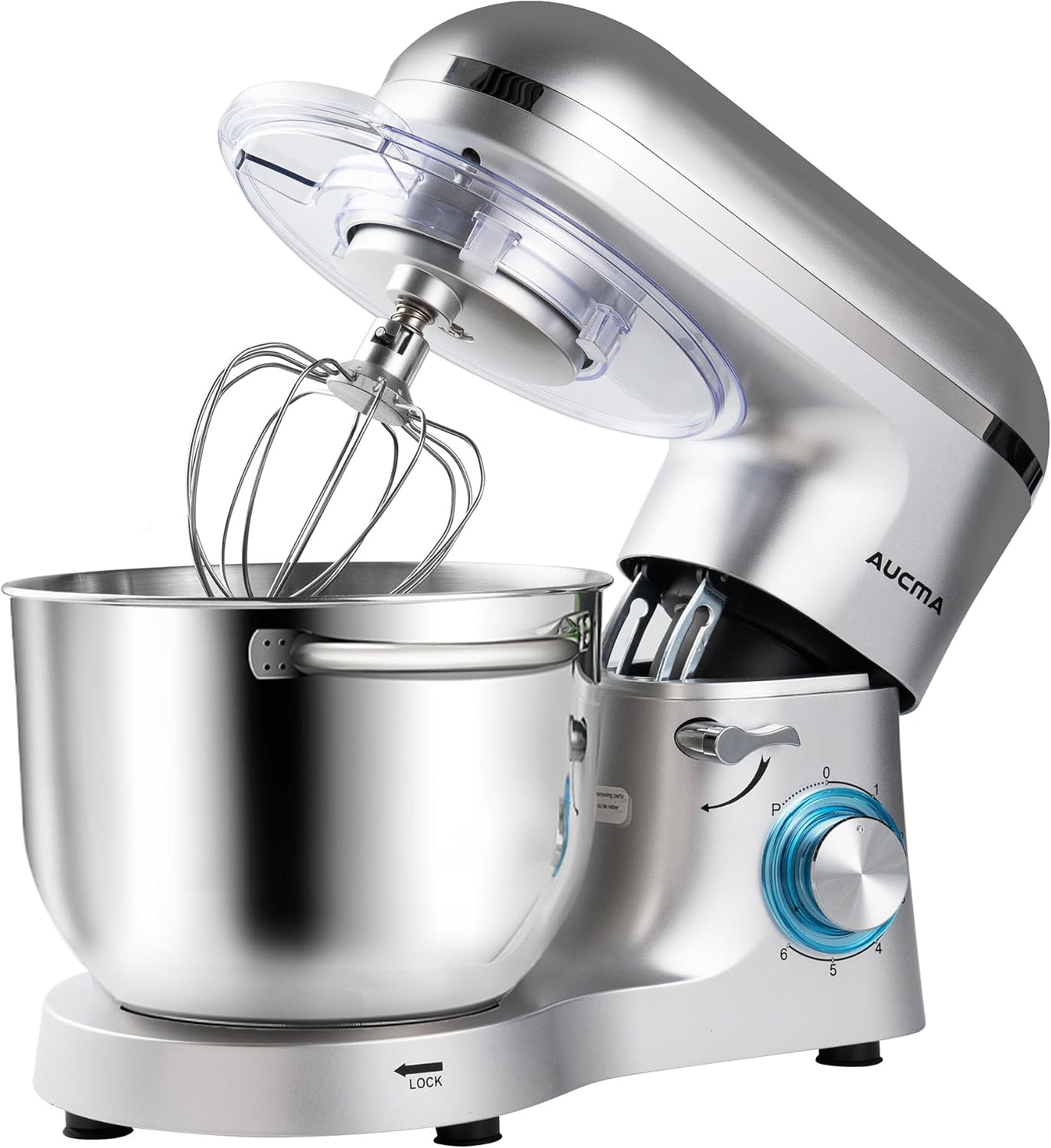
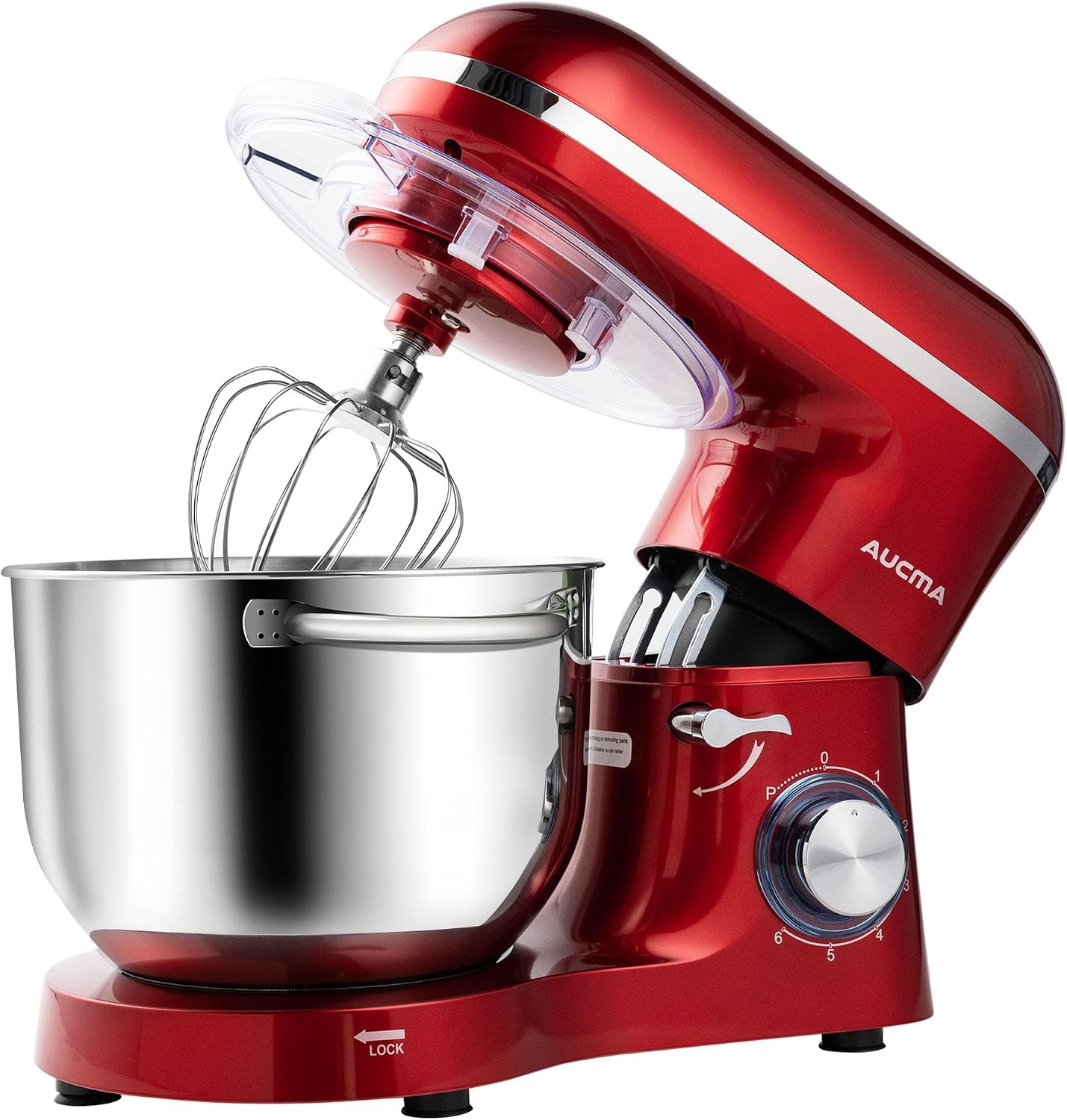
Who is this actually for? Someone with a cold kitchen who proofs a lot of dough and doesn’t want to think about it. That’s a real person — I was almost that person in January. The timer on the fermentation mode is genuinely convenient: set it, walk away, come back to risen dough, no checking. If that convenience is worth the premium over a plain mixer, fine. But don’t buy it because a video made you feel like your bread is inadequate. Your bread is fine. My bread was fine. The older Sunvivi 4-in-1 does the same mixing job without the fermentation markup, and the Amazon Basics 5.3-quart is the honest-budget alternative if you just need dough mixed.
Four months in, the mixer stays. The fruit stays in the fridge. I’ve made peace with both. Last weekend I proofed a batch of dinner rolls using the fermentation mode, set the timer, went for a walk, came back to perfect rolls. It was convenient. It was nice. It was not magic, and I’m done expecting it to be.
The linen apron woman posted a new video yesterday. Different product. Same apron. I watched eleven seconds and closed it.