Deciphering the Stand Mixer Landscape: Value, Performance, and Your Perfect Bake
Navigating the world of stand mixers can feel overwhelming, especially with so many models promising power and precision. This guide cuts through the noise, offering insights for home bakers, gift shoppers, and anyone trying to understand the nuances of a kitchen stand mixer. We’ll explore crucial buying criteria, weigh the value of premium brands against capable alternatives, and help you determine if a model like a 6.5-QT 660W 6-Speed Tilt-Head Food Mixer aligns with your baking ambitions. This guide reviews the Aucma stand mixer, a 660W tilt-head model with high capacity at a budget price.

Quick Answer
Choosing the right stand mixer balances your baking frequency, dough types, and budget. While premium brands offer long-term durability and extensive attachment ecosystems, numerous mid-range and budget-friendly models, often featuring capacities like 6.5 quarts and motors around 660 watts with a tilt-head design, provide substantial power and versatility for most home baking needs. Focus on usable power, build quality, and attachment options that genuinely suit your kitchen.
Aucma Stand Mixer: Buying Guide
A stand mixer represents a significant kitchen investment. Understanding its core characteristics helps you compare apples to apples, especially when looking at models like a 6.5-QT 660W 6-Speed Tilt-Head Food Mixer against more established names.
Capacity: Matching Quarts to Your Kitchen
Stand mixer bowls typically range from 3.5 to 7 quarts. A 6.5-quart capacity, as seen in many robust models, is quite generous. This size is ideal for preparing double batches of cookies, kneading dough for two large loaves of bread, or whipping multiple egg whites for a family-sized meringue. For a single person or someone baking infrequently, a 4.5 or 5-quart machine, like the popular KitchenAid Artisan 5 quart, might suffice and save counter space. Larger households or avid bakers preparing big batches will certainly appreciate the extra room a 6.5-quart bowl provides. However, remember that larger bowls can sometimes struggle with very small quantities, like a single egg white.
Motor Wattage and Torque: Beyond the Numbers Game
Many manufacturers highlight raw motor wattage, such as 660W, as a primary indicator of power. While wattage offers a glimpse, it doesn’t tell the whole story. A high-wattage motor might seem appealing, but the true measure of a stand mixer’s kneading and mixing capability lies in its torque and gear quality. Think of it this way: a powerful engine in a car still needs a good transmission to deliver that power to the wheels efficiently. Similarly, a mixer with a robust DC motor, well-engineered metal gears, and efficient power transmission will outperform an AC motor with higher wattage but inferior gearing when tackling stiff bread dough or dense batters. Don’t be fooled by wattage alone; research indicates how reliably the machine handles heavy loads over time.
Mechanism: Tilt-Head vs. Bowl-Lift
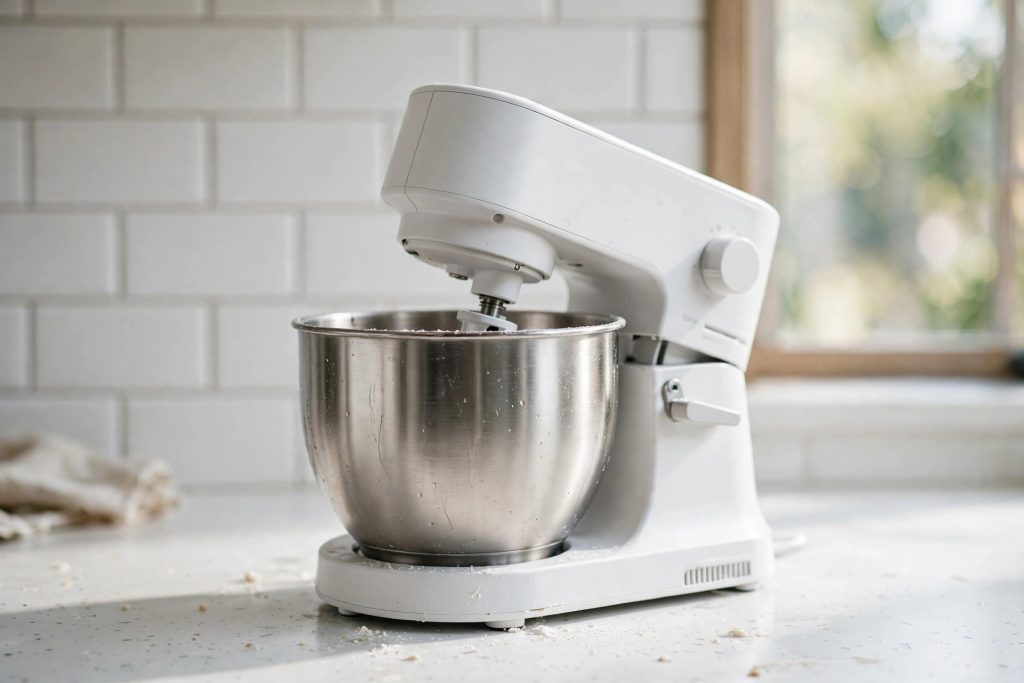
The tilt-head stand mixer design is favored by many home bakers for its ease of use. The head lifts up and tilts back, providing clear access to the bowl and beater for adding ingredients, scraping down sides, or removing the bowl. A 6-speed tilt-head food mixer offers straightforward operation and often fits under standard kitchen cabinets more easily than many bowl-lift models.
Bowl-lift mixers, conversely, feature a stationary head and raise the bowl into position. These machines typically boast more powerful motors and are often preferred for very heavy doughs or professional use, but their height can be a storage challenge, and accessing the bowl can be less intuitive for some. For most everyday baking, a well-built tilt-head stand mixer handles a wide range of tasks with comfort and convenience.
Attachment Hub Compatibility: Your Mixer’s Ecosystem
One of the significant advantages of a stand mixer is its versatility, largely due to the front attachment hub. Many premium brands offer a vast array of attachments, from pasta makers to spiralizers, all running off this single power source. When considering a stand mixer with attachments, it’s crucial to check if the brand offers a proprietary system or if it’s compatible with more universal attachments. Some budget alternatives use unique hub designs, limiting your future expansion options. A universal hub, common on some mid-range machines, means you’re not locked into one brand’s sometimes pricier accessories.
Build Materials: Durability for the Long Haul
The longevity of your electric stand mixer heavily depends on its construction. Machines with all-metal gears and heavy-duty die-cast metal bodies tend to be more durable and withstand the stress of heavy doughs better than those with plastic components, especially in critical areas like the motor housing or gear train. A sturdy build often translates to less vibration, more stable operation, and a longer lifespan, making it a better value over years of use, even if the initial investment is higher. Cheap plastic construction might lead to premature wear or even breakage under strenuous tasks.
Counter Footprint and Storage: Practical Kitchen Sense
Before committing to a professional stand mixer or even a large 6.5-quart model, measure your available counter space and overhead cabinet clearance. A tilt-head stand mixer needs vertical room to tilt its head back. Bowl-lift models can be taller overall. Consider also the weight of the machine; if you plan to store it in a pantry, will you want to lift a heavy appliance frequently? A 6.5-quart mixer can be substantial, so ensure it has a comfortable home in your kitchen.
Matching a Mixer to Your Baking Style
Your baking habits dictate the kind of stand mixer you truly need. Don’t overspend on features you won’t use, nor underspend on a machine that will struggle with your regular tasks.
The Occasional Baker: Effortless Convenience
If you bake a few times a year for holidays or special occasions, primarily light batters like cake mixes, cookies, or simple frosting, a robust entry-level or mid-range tilt-head stand mixer will serve you well. You likely don’t need the industrial strength of a professional stand mixer or a massive capacity. A 5-quart machine with a motor in the 300-400W range is often sufficient, offering good value without occupying too much space or demanding a premium price. Simplicity and ease of cleanup are probably higher priorities.
The Regular Home Baker: Versatility and Dependability
For those who bake weekly, tackling everything from sourdough bread and pizza dough to elaborate desserts and meringues, a more capable machine is essential. This is where models resembling a 6.5-QT 660W 6-Speed Tilt-Head Food Mixer truly shine. Their larger capacity handles double batches, and the increased motor strength (especially with good gearing) can manage heavier doughs without straining. A stand mixer with attachments becomes more appealing here, allowing for expanded culinary adventures. You’re looking for a machine that can consistently perform without overheating or breaking down, justifying a moderate investment in quality and features.
The Serious Hobbyist/Batch Baker: Power and Endurance
Baking multiple times a week, often making multiple loaves of bread, large batches of pastries, or high-volume meringues, demands a stand mixer built for endurance. You’ll benefit most from a larger capacity (6 quarts or more) and a motor specifically engineered for sustained heavy-duty work, often found in bowl-lift designs or the top tier of tilt-head stand mixer models. Metal gears throughout the drivetrain are non-negotiable. While these machines come with a higher price, their longevity and consistent performance under stress make them an invaluable tool for dedicated bakers.
Stand Mixer Tiers: Value vs. Premium
The stand mixer market spans a wide range, from budget-friendly options to high-end, long-lasting appliances. Here’s a breakdown of common tiers.
| Type | Best For | Price Tier | Key Feature | Watch-Out |
|---|---|---|---|---|
| Budget Tilt-Head | Occasional baking, light batters, gift-giving | Entry-level | Simple operation, accessible price, compact | Less durable, struggles with heavy dough, limited attachment options |
| Mid-Range Tilt-Head | Regular home baking, versatile tasks, value | Moderate | Good balance of power/capacity, generally reliable | Gear quality varies, may lack premium build of high-end models |
| Premium Tilt-Head/Bowl-Lift | Avid bakers, heavy-duty use, longevity | Substantial | Robust build, powerful motor, extensive ecosystem | Higher initial cost, can be bulky, might be overkill for light use |
- Budget Tilt-Head: These mixers are stand mixer for beginner bakers or those who simply need an occasional helper for cake mixes and whipped cream. They’re often quite light and may have more plastic components, making them less suited for dense doughs. Their affordability makes them a popular stand mixer gift for baker who’s just starting out.
- Mid-Range Tilt-Head: This tier includes many models with specs similar to a 6.5-QT 660W 6-Speed Tilt-Head Food Mixer. They offer a compelling balance of capacity, motor strength, and features for most home cooks. You’ll find these models from brands like Cuisinart, Cosori, or even more robust Hamilton Beach offerings, presenting a strong budget alternative to KitchenAid mixer. The key here is to investigate the internal components, not just the advertised wattage.
- Premium Tilt-Head/Bowl-Lift: Represented by brands like KitchenAid’s higher-end lines or Bosch, these are built for serious and frequent use. They typically feature all-metal construction, powerful motors designed for torque, and extensive attachment compatibility. The investment is higher, but so is the expectation of a decade-plus lifespan.
The “Is It Worth It?” Debate: KitchenAid vs. Alternatives
Few kitchen appliances spark as much discussion as the KitchenAid stand mixer. Is a KitchenAid stand mixer worth it, or is it overpriced compared to the competitive landscape? This isn’t a simple yes or no answer; it hinges entirely on your priorities and budget.
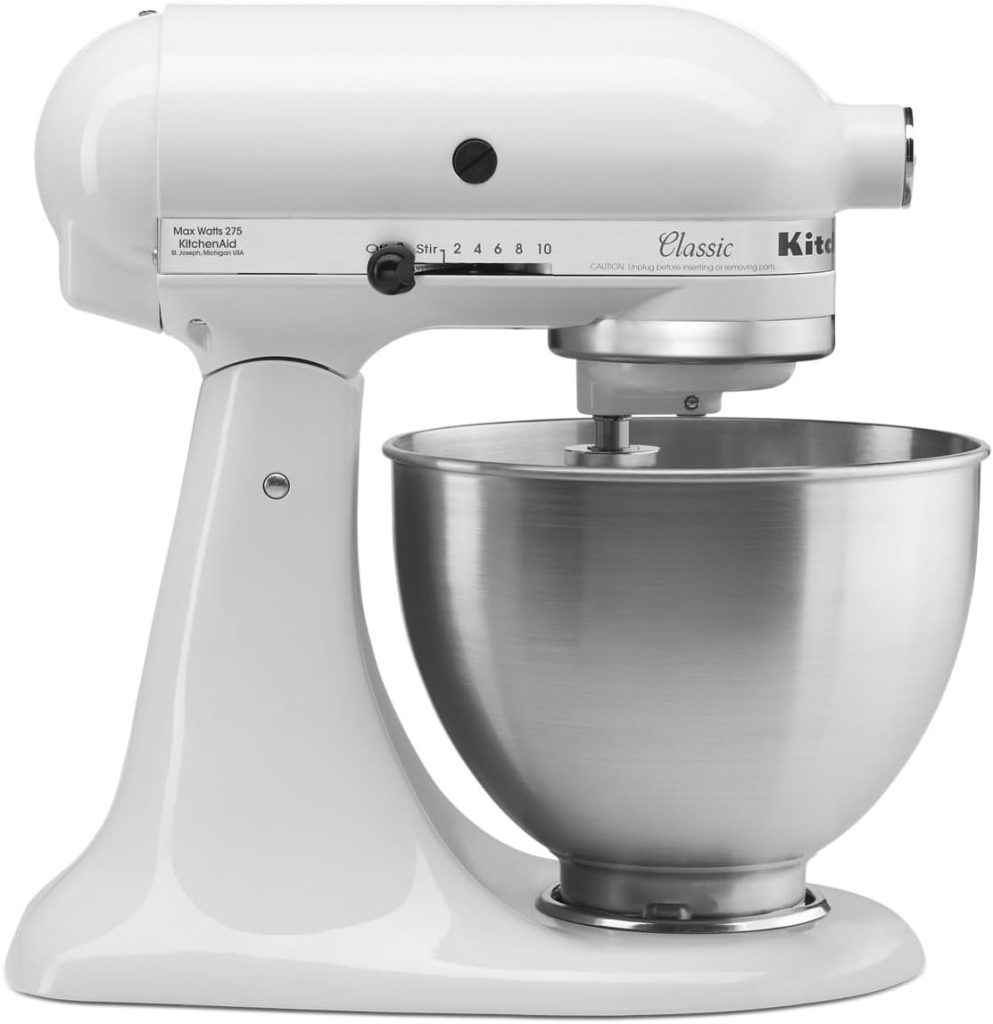
On one side, proponents argue that KitchenAid’s reputation for durability, iconic design, and vast ecosystem of attachments makes it a wise, long-term investment. A KitchenAid Artisan 5 quart isn’t just a mixer; for many, it’s a culinary heirloom. Their motors are often praised for their consistent torque delivery, even at lower wattages compared to some alternatives, indicating superior internal gearing. The resale value remains consistently high, and parts are widely available, ensuring repairability rather than replacement. For a baker who uses their machine weekly and expects it to last 10-15 years, a KitchenAid often delivers on that promise.
Conversely, many bakers question the price premium, especially when looking at the wattage comparison. Some alternatives, like a 660W tilt-head food mixer, boast significantly higher wattage for a fraction of the cost. Critics suggest that KitchenAid leverages brand recognition, making its mixers seem overpriced when direct power specs are considered. Brands like Hamilton Beach, Cuisinart, and others have stepped up their game, offering mixers with similar capacities, multiple speeds, and robust-looking designs for considerably less. For an occasional baker, or someone on a tighter budget, a Hamilton Beach stand mixer vs KitchenAid comparison often leads to the conclusion that the budget alternative provides sufficient performance without the hefty price tag.
Ultimately, the decision comes down to value perception. If you prioritize brand legacy, proven longevity, repairability, and access to a broad attachment system, the premium price of a KitchenAid might be justified for you. If you’re a regular home baker seeking solid performance, good capacity, and strong motor power (like a 6.5-QT 660W 6-Speed Tilt-Head Food Mixer) without the brand-name expense, then a quality alternative offers excellent value, allowing you to achieve similar baking results for less. Both approaches are valid, depending on individual needs.
Making the Right Choice for Your Kitchen: A Decision Tree
Use this simple guide to narrow down your options for a stand mixer for baking.
- You bake a few times a year for basic recipes (cookies, cakes from mixes):
- Choose: A budget-friendly tilt-head stand mixer (4-5 quart capacity, 300-400W). It’s easy to use, won’t break the bank, and is likely all you’ll ever need.
- You bake weekly, including bread dough, meringues, and larger batches:
- Choose: A mid-range tilt-head stand mixer (5-6.5 quart capacity, 500W+ with good gearing, like a 6.5-QT 660W 6-Speed Tilt-Head Food Mixer). This tier offers the versatility and power for most home baking challenges. Consider machines with metal gears for durability.
- You are a serious hobby baker, frequently making heavy doughs, or plan to use numerous attachments:
- Choose: A premium stand mixer (5-7 quart capacity, robust motor, all-metal construction, often a bowl-lift design). While a higher investment, it’s built to last and handle consistent, demanding use. This is where the long-term value of a KitchenAid often shines, especially if you foresee needing specialized attachments.
- You’re looking for a stand mixer gift for a baker:
- Choose: Consider their current skill level and frequency. A KitchenAid Artisan 5 quart is a classic gift, but a well-regarded mid-range electric stand mixer offering competitive specs provides a generous and functional alternative without the premium price, especially if the recipient is just starting out. Aesthetic considerations, like best stand mixer color options, might also play a role for a gift.
Common Mistakes When Buying a Stand Mixer
Many first-time stand mixer buyers fall into predictable traps. Avoiding these can save you money and frustration.
- Buying Based on Wattage Alone: As discussed, a higher wattage number doesn’t automatically mean a more powerful or durable mixer. Some 325W or 500W premium mixers easily outperform 1000W budget models on heavy dough due to superior motor design and all-metal gearing. Prioritize torque and build quality over raw watts.
- Underestimating Counter/Storage Space: A stand mixer is a substantial appliance. Many overlook the vertical clearance required for a tilt-head stand mixer to fully open, or the sheer bulk of a larger capacity model. Measure your kitchen space carefully before purchase.
- Overbuying Capacity for Occasional Bakers: If you only whip cream and make occasional cookie dough, a 6.5-quart mixer might be overkill. Smaller capacities are often more affordable, take up less space, and are easier to maneuver, making them a better fit for light users.
- Ignoring Attachment Hub Compatibility: If you envision making pasta, grinding meat, or spiralizing vegetables in the future, check the stand mixer with attachments options before you buy. Some brands use proprietary hubs, limiting you to their (sometimes expensive) accessories. If an ecosystem is important to you, consider a brand with a broad, well-established range of attachments.
Why/How/What Mini-Section
Why invest in a quality stand mixer?
A quality electric stand mixer transforms your baking experience by automating tedious tasks, freeing your hands, and ensuring consistent results. It handles heavy kneading, lengthy whipping, and thorough mixing with ease, preventing arm fatigue and allowing you to multitask. For avid bakers, it’s a durable workhorse that saves significant time and effort, making complex recipes more approachable.
How does wattage relate to actual mixing power?
Wattage indicates the power drawn by the motor, not necessarily the power delivered to the bowl. Actual mixing power, especially for dense doughs, depends on the motor’s torque and the quality of the internal gears that transmit that power. A lower wattage motor with efficient, all-metal gearing can often perform better than a higher wattage motor with less efficient, plastic gears, especially under load.
What are the practical differences between tilt-head and bowl-lift?
A tilt-head stand mixer offers easy access to the bowl and beater by simply tilting the head back, making it convenient for adding ingredients or scraping. Bowl-lift models, on the other hand, raise the bowl into position with a lever. They tend to be taller, sturdier for heavy tasks, and preferred by many serious bakers, but might offer less direct access to the bowl opening during operation.
Keep reading: Hamilton Beach 7-Speed Electric Stand Mixer (4-Qt) Reviewed. · Hamilton Beach 4 Qt 7-Speed Stand Mixer: Review & Verdict
FAQ
What capacity stand mixer do I really need?
For most home bakers, a 5-quart stand mixer (like the KitchenAid Artisan 5 quart) is versatile enough for single batches of cookies or bread. If you regularly bake double recipes or large loaves, a 6.5-quart machine provides ample room without being overly cumbersome for most kitchens.
Is a high wattage stand mixer always better?
Not necessarily. While a 660W motor sounds powerful, the true indicator of a stand mixer’s performance for heavy tasks is the motor’s torque and the quality of its internal gearing. A lower-wattage motor with well-engineered metal gears can often outperform a higher-wattage motor with plastic gears.
Should I choose a tilt-head or bowl-lift stand mixer?
A tilt-head stand mixer is generally easier to use for everyday baking, offering better access to the bowl. Bowl-lift models, often found in professional stand mixer lines, are typically more robust for heavy doughs and high-volume tasks but can be taller and less convenient for adding ingredients.
Is KitchenAid stand mixer worth the investment compared to cheaper alternatives?
The debate around whether a KitchenAid stand mixer worth it really boils down to your priorities. KitchenAid offers proven durability, high resale value, and a vast attachment ecosystem. Alternatives, often featuring strong specs like a 6.5-QT 660W 6-Speed Tilt-Head Food Mixer, provide comparable power and capacity for less, making them a budget alternative to KitchenAid mixer suitable for many home bakers.
What’s the best stand mixer color for my kitchen?
The best stand mixer color options are entirely personal. Brands offer everything from classic chrome to vibrant hues. Consider your kitchen’s existing decor – do you want it to blend in or be a statement piece? A classic color might have broader appeal if it’s a stand mixer gift for baker.
Can I really knead bread dough with a tilt-head stand mixer?
Yes, many modern tilt-head stand mixer models, especially those with good motor torque and robust construction, are perfectly capable of kneading bread dough. While a bowl-lift might offer slightly more stability for very stiff or large batches, a quality 6-speed tilt-head food mixer should handle most home bread recipes without issue.
What should I look for in a stand mixer for beginner bakers?
A stand mixer for beginner bakers should be intuitive, reliable, and not overly complex. A 4.5 to 5-quart tilt-head stand mixer with a solid motor is an excellent starting point. Don’t overspend on features or capacity you won’t use; focus on ease of use and consistent performance for common recipes.
Final Recommendation
For the vast majority of home bakers who churn out cookies, cakes, and occasional bread, a mid-range tilt-head stand mixer offering a capacity of 5 to 6.5 quarts and a motor around the 660W mark (or lower, if the brand is known for good gearing) provides the best balance of value and performance. These machines, often seen as a robust budget alternative to KitchenAid mixer, deliver ample power for diverse tasks without demanding the premium price of a top-tier brand. You’ll get dependable performance for weekly baking, allowing you to explore new recipes with confidence.
However, if you’re a serious hobbyist, baking multiple times a week with heavy doughs, or if you envision using a wide array of specialized attachments for decades to come, then investing in a premium, all-metal stand mixer from a brand known for longevity and repairability is truly worthwhile. The initial cost is higher, but the long-term durability and extensive ecosystem often justify the expenditure.
#Aucma #Stand #Mixer6.5QT #660W #6Speed #TiltHead #Food #Mixer
Common Questions About Aucma 660W Tilt-Head Stand Mixer
Is a 660W stand mixer powerful enough for bread dough?
Yes for most home baking — 660 watts handles stiff bread doughs, double batches of cookies, and thick batters without straining, provided you use the dough hook and give the motor rest breaks on very long kneads. Wattage is only part of the story; gearing and torque matter as much.
For occasional bread baking it is plenty. If you knead dense whole-grain doughs weekly in large batches, a premium bowl-lift model with higher torque will outlast a budget tilt-head over the years.
Is the Aucma stand mixer a good KitchenAid alternative?
It is a good budget alternative for the cost-conscious baker — you get large capacity and solid power for a fraction of the premium price, which is compelling if you bake occasionally to regularly. The trade-offs are long-term durability and the attachment ecosystem.
KitchenAid wins on decades-long reliability, resale value, and dozens of attachments. Aucma wins on upfront value. Choose based on baking frequency: weekly-plus bakers should invest in premium; occasional bakers get excellent value from budget models.
What capacity stand mixer do I really need?
Five to six quarts covers most home bakers — big enough for double cookie batches and bread dough, small enough to still handle a single cake batter effectively. Very large bowls struggle with small batches since the beater cannot reach the ingredients.
The Aucma's 6.5-quart capacity suits batch bakers and big families. If you mostly make single recipes, a 4.5 to 5-quart model actually performs better day to day. Match the bowl to your typical batch, not your biggest holiday bake.
Is a high wattage stand mixer always better?
No — wattage measures power draw, not mixing effectiveness, and efficient gearing can outperform raw watts. A well-built 500W mixer with good torque often outmixes a cheap 1000W unit that wastes energy as heat and noise. Wattage is a useful data point, but it is marketing's favorite misleading number in this category.
Look at the whole package: build quality, gear materials (metal beats plastic), and real-world dough performance. Wattage is a useful data point, but it is marketing's favorite misleading number in this category.
Tilt-head vs bowl-lift — which mixer design is better?
Tilt-head is better for most home bakers — the head tilts back for easy bowl access, beater changes, and adding ingredients, which matters every single time you use it. Bowl-lift suits very large, heavy batches where maximum stability matters. Most home kitchens should default to tilt-head for the everyday convenience.
For capacities up to about 6 quarts, tilt-head convenience wins. Bowl-lift earns its place at 7-plus quarts or in heavy daily use where the clamping mechanism's rigidity pays off. Most home kitchens should default to tilt-head.